Updated October 24, 2026 · TruOak Cabinetry & Construction
A cabinet is three different decisions
People talk about "wood cabinets" or "MDF cabinets", but every cabinet is really three parts: the box (the sides, bottom and back you mostly never see), the doors and drawer fronts you see every day, and the hardware that opens and closes them. Each part can use a different material, and the best choice for one is often not the best for another.
Cabinet boxes: plywood, particleboard or MDF
The box carries the weight of the countertop and everything inside it.
| Material | Good at | Watch out for |
|---|---|---|
| Plywood | Strong for its weight, holds screws well, more forgiving if it gets a little wet. | Costs more. Edges must be finished or banded. |
| Particleboard / melamine | Very flat and stable, easy to keep clean, the most common box material. | Heavy. Swells if water gets into an exposed edge, which matters most under the sink. |
| MDF | Very smooth and stable, takes paint well, good for exposed panels. | Heavy, and swells if water gets in. |
All three can make a good cabinet when the joinery, edge banding and installation are done properly. Ask what the box is made of, and especially what is used under the sink.
Doors and drawer fronts
- Solid wood: real grain that can be stained. Wood moves with humidity, and Ottawa’s dry winters and humid summers are hard on it. On painted five-piece wood doors, that movement can show as hairline cracks in the paint at the joints.
- MDF: the usual choice for painted doors. It does not move with the seasons, so paint stays smooth. It cannot be stained like wood.
- Wood veneer: a thin layer of real wood over a stable core. It gives the look of wood on flat slab doors without the movement of solid wood.
- Laminate and melamine: durable and easy to clean, in solid colours and wood looks, at a lower price.
- Thermofoil (vinyl wrapped over MDF): an inexpensive option, but it can lift or peel near heat sources such as an oven or a toaster.
Painted, stained or natural
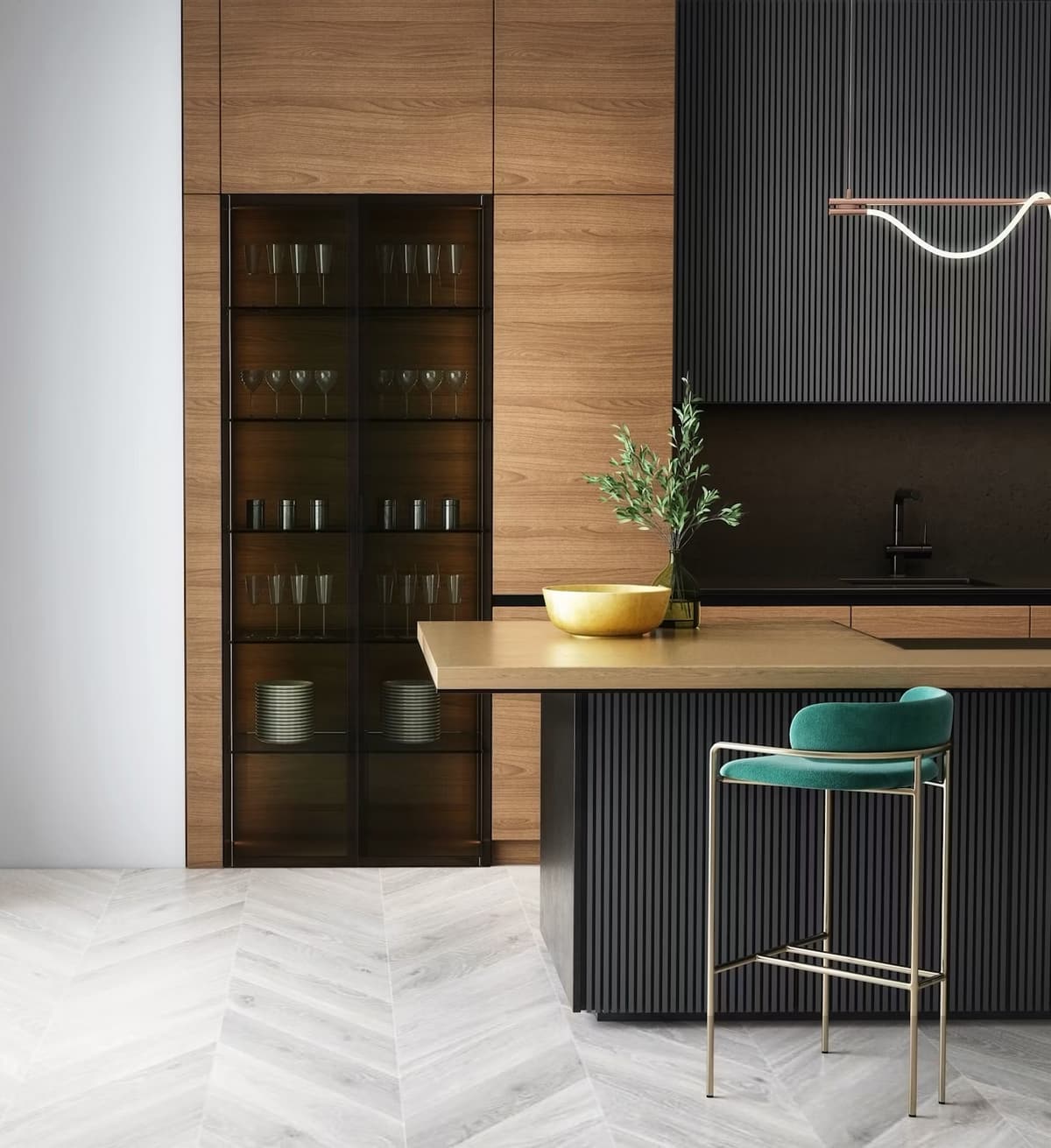
Painted cabinets give a clean, solid colour and show chips more than stained wood does. Stained and clear-coated wood shows the grain and hides small marks. Two-tone kitchens, for example painted perimeter cabinets with a wood island, are common and let each part use the finish that suits it.
Hardware matters more than people expect
You open drawers and doors thousands of times a year. Full-extension drawer slides let you reach the back of the drawer, and soft-close hinges and slides stop doors from slamming. Good hardware often makes a bigger daily difference than the box material.
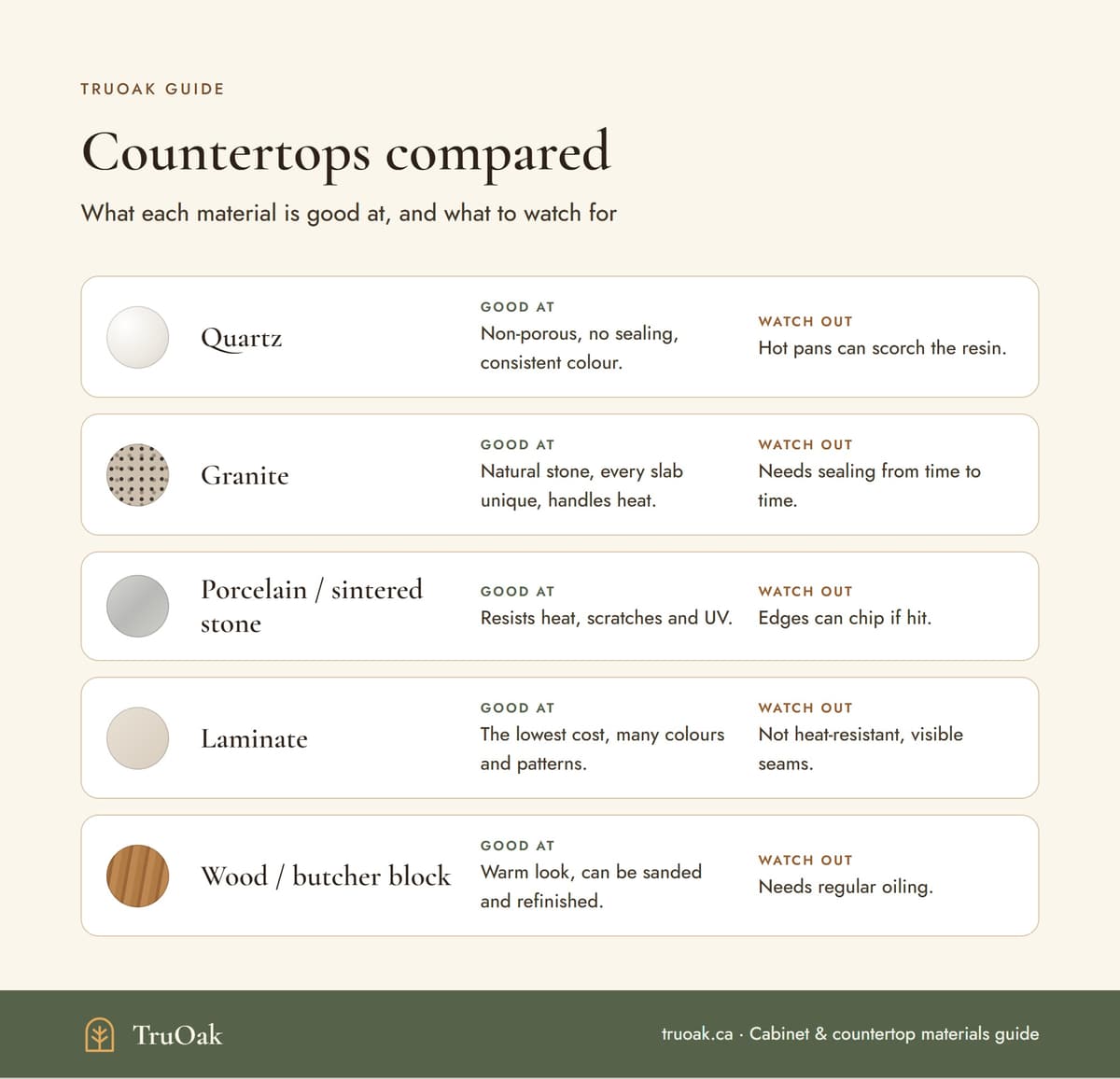
Countertops compared
| Material | Good at | Watch out for |
|---|---|---|
| Quartz | Engineered stone. Non-porous, no sealing, consistent colour. | Do not put hot pans directly on it: the resin can scorch. A Toronto guide lists it at $70 to $140 per square foot. |
| Granite | Natural stone. Each slab is unique and it handles heat well. | Needs sealing from time to time to resist stains. |
| Porcelain / sintered stone | Very resistant to heat, scratches and UV. Thin, modern profiles. | Edges can chip if hit. Needs a fabricator who knows the material. |
| Laminate | The lowest cost, many colours and patterns. | Not heat-resistant, visible seams, and most do not suit an undermount sink. |
| Wood / butcher block | Warm look, can be sanded and refinished. | Needs regular oiling, and care around the sink. |
How to choose
- Painted look: MDF doors are the safest choice.
- Wood grain: solid wood or wood veneer, stained or clear-coated.
- Busy family kitchen: put the budget into drawers, hardware and a countertop you do not have to baby.
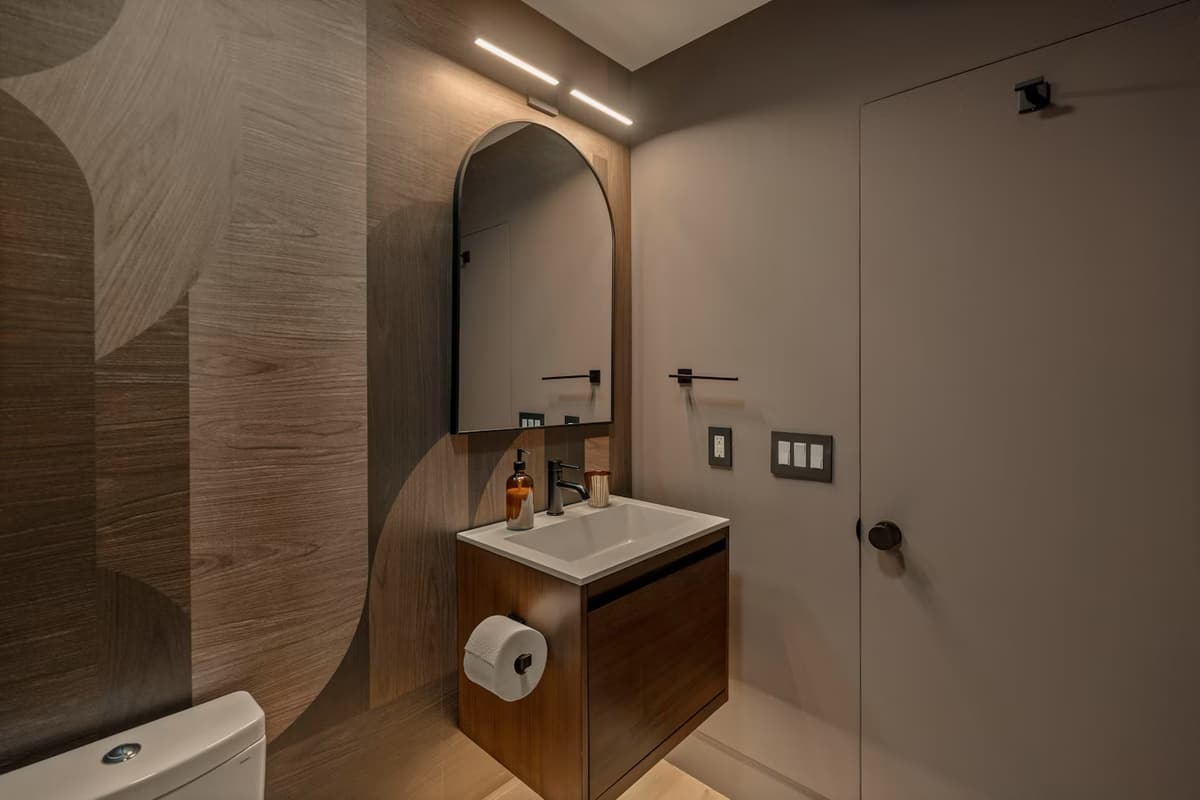
- Bathroom vanities: moisture is the enemy, so ask about the box material and edge sealing.
- Whatever you choose, get it in writing before production, so the cabinets that arrive are the ones you approved.
How we handle it at TruOak
We build cabinets to the room and go through the door style, colour, finish and hardware with you before anything is made. Your selections are confirmed in writing and the quotation is tied to the drawings, so you know exactly what you are getting. Every project has a 2-year warranty.